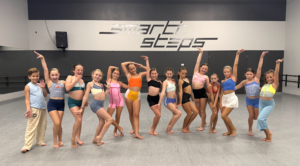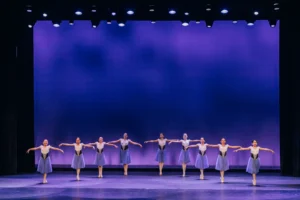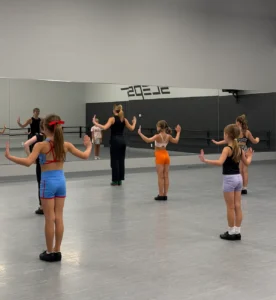
Ballet training is the technical foundation every other dance style builds on, from hiphop and jazz, to contemporary and even acro. At Smartt Steps, we build our entire program around that, for the dancer who takes one class a week and the dancer training five days for the EDGE Company. It’s not a separate track; it’s the foundation everything else stands on.
How does every dance style come back to ballet?
Turnout, alignment, spotting, and musicality all trace back to ballet training. A dancer who understands how to hold a strong relevé in ballet class learns control that transfers into a hip hop routine. A dancer who’s learned correct alignment in first position carries that alignment into a jazz technique and contemporary choreography.
This is why we teach ballet across our recreational schedule, not only in our competitive program. Ballet and technique classes run for every age group, starting with our 3 to 5 combo classes and continuing through age 13 and up. A dancer doesn’t need to compete to get this training. They just need to walk in the door.
Who teaches ballet at Smartt Steps?
Three instructors lead our ballet and technique classes: Lydia McRae, our primary ballet instructor, along with Alexandria Wright and Roshunda Brown, who each teach two ballet classes. Our instructor each bring their unique background, experience, and approach to the classroom, giving our students the well-rounded dance education they need.
Lydia trained with Richmond Ballet and performed with Complexions Contemporary Ballet, the Oakland Ballet, and Ballet Memphis. Alexandria trained through the Baltimore School for the Arts as a dance major. Her summer intensive training includes American Ballet Theatre, Los Angeles Ballet, Joffrey Ballet, and Cincinnati Ballet. Roshunda studied dance at Western Kentucky University, training in ballet, modern, jazz, and tap.
You can read our full faculty list on the About page. This is the level of training behind every ballet class we teach, recreational or competitive.
What does our YAGP participation show about our training?
YAGP, the Youth America Grand Prix, is one of the most competitive ballet scholarship competitions for young dancers in the world. Last year, we sent one of our dancers to Atlanta. This year, we’re sending three dancers to compete in Nashville.
That growth matters more than the number itself. Preparing a dancer for YAGP means pushing beyond what a normal class week requires: additional rehearsals, elevated technique, and the kind of consistency that holds up under a panel of judges who see hundreds of dancers a day. It means our ballet training is reaching a standard that holds up against dancers from studios that train for YAGP exclusively. We didn’t build our program around chasing that result. We built a ballet foundation strong enough that a handful of dancers were ready for it, and we expect that number to keep growing.
Is strong ballet training only for competitive dancers?
No. This is the part parents of recreational dancers sometimes miss. The same instructors who prepare our YAGP dancers teach our recreational ballet classes. The training standard doesn’t change based on whether a dancer plans to compete, and class sizes stay small enough that every dancer gets real correction, not just a spot in the back row.
A recreational dancer who takes ballet consistently builds body awareness, coordination, and the kind of discipline that shows up outside the studio too. Some of those dancers decide later they want to audition for the EDGE Company. And if not, the training still shapes how they move, carry themselves, and approach a challenge.
That’s what we are all about here. Helping our dancers flourish, both inside and outside of the studio.
Frequently asked questions
Should I consider ballet for my recreational dancer? It’s worth a try. Ballet builds the alignment and control that jazz, contemporary, hip hop, and acro all depend on, so a dancer taking ballet alongside their other styles tends to pick things up faster across the board. No pressure to be a ballerina, it just makes every other class easier.
What is YAGP? YAGP stands for Youth America Grand Prix, a ballet competition and scholarship program for young dancers recognized internationally. Studios send dancers to regional auditions, and top performers can advance toward scholarships with major ballet schools and companies.
Can a recreational dancer move into competitive training later? Yes. Because our recreational and competitive dancers train under the same instructors with the same technical standard, the move is about readiness and interest, not starting over. EDGE Company auditions happen each May.
How often should my dancer take ballet class to build a strong foundation? Once a week builds a real foundation for most recreational dancers. Dancers who want to advance faster, including those preparing for company auditions, typically add a technique class alongside ballet.
See our ballet and technique classes
If you want to see what this training looks like for your dancer, visit our ballet and technique class schedule to find the right class for their age and level.